
Experienced Divorce Lawyers in Chandigarh, India – Legal Guide 2026
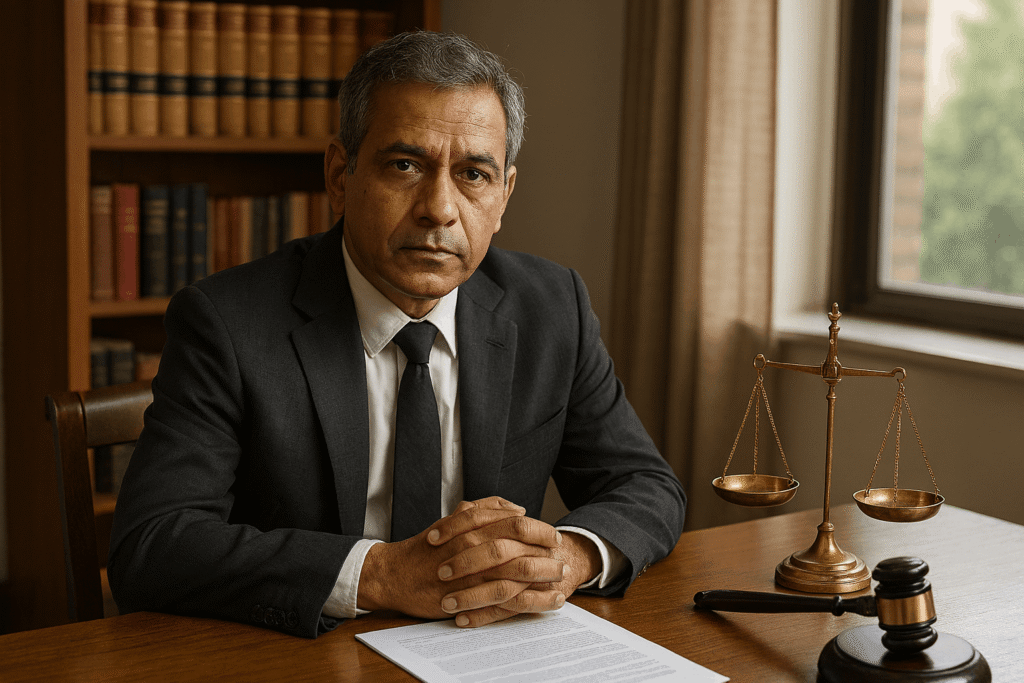
Divorce law in India is governed by a complex interplay of personal laws, statutory enactments, and judicial precedents. Individuals seeking legal information about separation, dissolution of marriage, maintenance, or child custody often search for experienced divorce lawyers Chandigarh due to the city’s status as a major legal and administrative hub. This article provides an informational and legally accurate overview of divorce law and procedure applicable in India, with contextual reference to practice before family courts in Chandigarh.
The objective is to explain the legal framework, rights and obligations of parties, procedural mechanisms, and recent judicial developments relevant to experienced divorce lawyers Chandigarh, without offering legal advice or engaging in promotional positioning.
Conceptual Overview – Divorce under Indian Law
Divorce refers to the legal dissolution of a valid marriage by a competent court. Indian law recognizes divorce under different personal law systems, depending on the religion or form of marriage of the parties.
Broadly, divorce may be classified into:
-
Divorce by mutual consent – where both spouses agree to dissolve the marriage.
-
Contested divorce – where one spouse seeks dissolution on legally recognized grounds such as cruelty, desertion, adultery, or mental disorder.
The purpose of divorce law is not punitive but remedial—aimed at resolving irretrievable breakdown of marital relationships while safeguarding the rights of spouses and children.
Statutory Framework under Indian Law
1. Constitutional Provisions
-
Article 14 – Equality before law.
-
Article 15(1) – Prohibits discrimination on grounds of religion, sex, caste.
-
Article 21 – Right to life and personal liberty, interpreted to include dignity and marital autonomy.
(Full text: https://legislative.gov.in/constitution-of-india/)
2. Personal Law Statutes
Hindu Marriage Act, 1955
Applicable to Hindus, Buddhists, Jains, and Sikhs.
Key provisions:
-
Section 13 – Grounds for divorce
-
Section 13B – Divorce by mutual consent
https://legislative.gov.in/sites/default/files/A1955-25.pdf
Special Marriage Act, 1954
Applies to interfaith or civil marriages.
-
Section 27 – Divorce grounds
-
Section 28 – Mutual consent divorce
https://legislative.gov.in/sites/default/files/A1954-43.pdf
Muslim Personal Law
-
Dissolution of Muslim Marriages Act, 1939
-
Muslim Personal Law (Shariat) Application Act, 1937
https://legislative.gov.in/sites/default/files/A1939-08.pdf
Indian Divorce Act, 1869
Applies to Christian marriages.
https://legislative.gov.in/sites/default/files/A1869-04.pdf
3. Procedural Laws
-
Code of Civil Procedure, 1908
https://legislative.gov.in/sites/default/files/A1908-05.pdf -
Family Courts Act, 1984
https://legislative.gov.in/sites/default/files/A1984-66.pdf
Rights, Duties, and Legal Obligations
Rights of Spouses
-
Right to seek dissolution of marriage on statutory grounds
-
Right to maintenance (interim and permanent)
-
Right to child custody or visitation
-
Right to property claims where applicable
Duties and Obligations
-
Duty to disclose income and assets
-
Duty to comply with maintenance and custody orders
-
Duty to participate in court-mandated mediation where ordered
Procedural Aspects and Legal Mechanisms
Jurisdiction
Divorce petitions are filed before the Family Court having territorial jurisdiction:
-
Place of marriage
-
Last matrimonial residence
-
Place where wife resides (in many cases)
In Chandigarh, divorce matters are adjudicated under the Family Courts system, subject to appellate review by the Punjab and Haryana High Court (https://highcourtchd.gov.in/).
Step-by-Step Legal Process
1. Filing of Petition
The petitioner files a petition under the relevant statute with supporting affidavits and documents.
2. Service of Summons
Notice is issued to the respondent spouse.
3. Mediation and Conciliation
Courts are mandated to explore reconciliation before proceeding with trial.
4. Evidence Stage
Affidavits, documents, and witness testimony are recorded.
5. Final Arguments and Decree
Court pronounces judgment and passes decree of divorce if grounds are proved.
Judicial Interpretation and Landmark Case Laws
1. Shayara Bano v. Union of India (2017)
Declared triple talaq unconstitutional, reinforcing gender justice.
Judgment: https://main.sci.gov.in/judgments
2. Amardeep Singh v. Harveen Kaur (2017)
Held that six-month waiting period in mutual consent divorce can be waived.
3. V. Bhagat v. D. Bhagat (1994)
Defined mental cruelty as a valid ground for divorce.
4. K. Srinivas Rao v. D.A. Deepa (2013)
Recognized mental cruelty arising from false allegations in matrimonial disputes.
Judgments can be accessed via the Supreme Court of India portal:
https://main.sci.gov.in/judgments
Practical Implications for Individuals and Families
Financial Consequences
-
Alimony and maintenance under Section 125 CrPC and personal law statutes
-
Division of jointly held property
Child Custody
-
Determined on the “best interest of the child” principle
-
Custody may be sole, joint, or shared
Social and Psychological Impact
-
Legal separation often involves emotional stress
-
Courts emphasize mediation to reduce adversarial conflict
Common Misconceptions and Clarifications
| Misconception | Legal Reality |
|---|---|
| Divorce is granted automatically | Must be based on statutory grounds |
| Wife always gets custody | Court decides based on child’s welfare |
| Mutual consent divorce is instant | Requires court approval |
| Alimony is mandatory in all cases | Depends on financial circumstances |
Frequently Asked Questions
Q1. Which court handles divorce cases in Chandigarh?
Divorce matters are filed before the Family Court having jurisdiction in Chandigarh, subject to appeal before the Punjab and Haryana High Court.
Q2. What are valid grounds for divorce in India?
Cruelty, adultery, desertion, conversion, mental disorder, incurable disease, and mutual consent.
Q3. How long does a divorce case take?
Mutual consent divorce may conclude in months; contested cases may take longer depending on evidence and complexity.
Q4. Is maintenance mandatory after divorce?
Maintenance depends on financial need and earning capacity of parties.
Q5. Can mediation be skipped?
Courts generally require mediation unless exceptional circumstances exist.
Emerging Trends and Legal Developments in India
-
Waiver of Cooling-Off Period
Courts increasingly waive mandatory waiting periods where reconciliation is impossible. -
Recognition of Irretrievable Breakdown
The Supreme Court has invoked Article 142 to dissolve marriages beyond statutory grounds in exceptional cases. -
Digitization of Family Court Records
Online filing and virtual hearings have improved access to justice. -
Gender-Neutral Maintenance Debates
Judicial discourse is evolving toward balanced economic responsibility.
Divorce law in India represents a structured attempt to balance individual autonomy with social stability. Understanding the statutory framework, procedural steps, and judicial interpretations is essential for navigating matrimonial disputes responsibly. For individuals seeking general information about experienced divorce lawyers Chandigarh, the legal system provides defined rights, remedies, and safeguards under constitutional and statutory law.